
Step 1: The business analysis
First we record what is. Evaluation comes afterwards. The result is a picture of your business that is not based on assumptions.
Company profile, roles, tasks and management routines are recorded in a structured way: who does what, who stands in for whom, which task has no one responsible at all.
From the data we calculate the weekly load per role, bottlenecks and key figures. A typical finding: the boss carries tasks for which a role should have existed long ago.
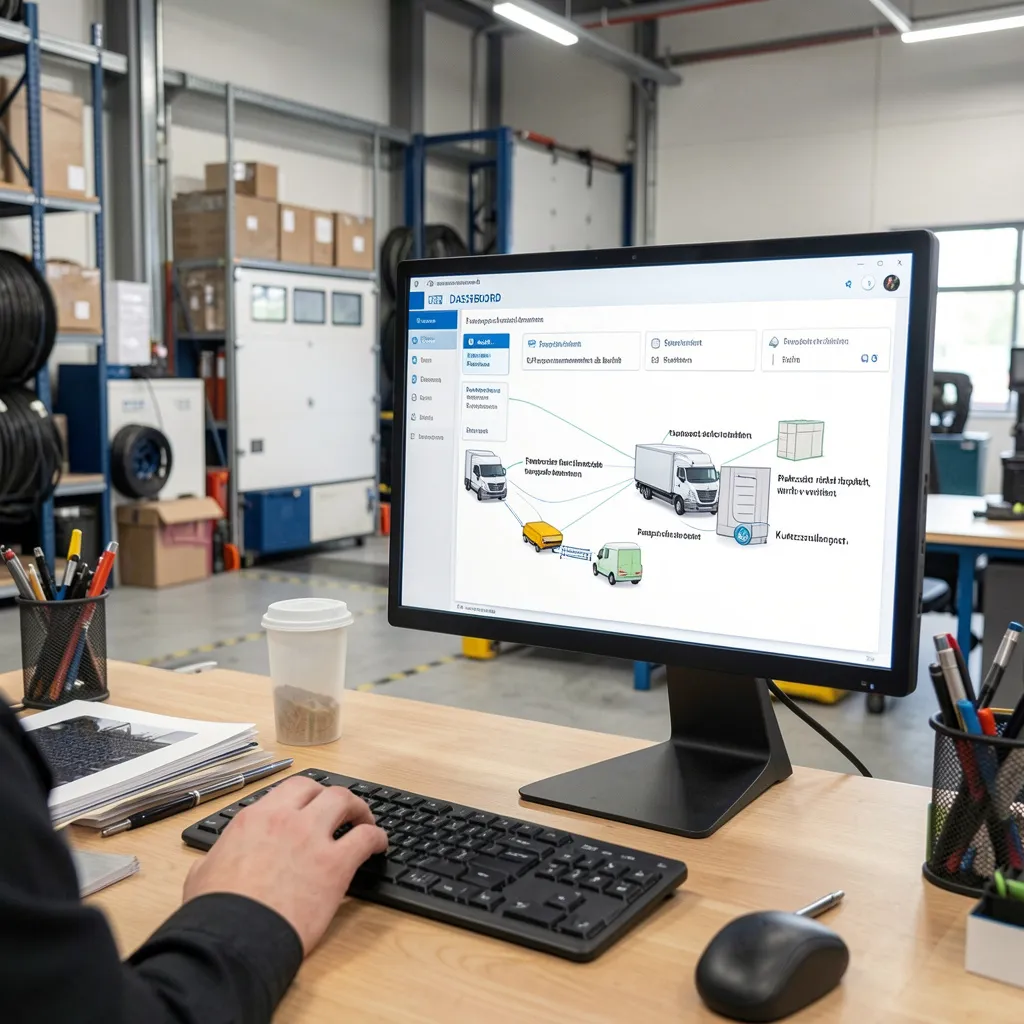
You receive current and target organisation charts, workflows and a system map as diagrams, plus an action plan with a clear sequence. Delivered as a report with a presentation meeting.
The report belongs to you. Whether you implement the measures yourself or hand them to us is your decision afterwards.
Step 2: Organisation, processes and automation
Whatever the analysis identifies as a bottleneck gets fixed. AI automation is one tool among many: often clean structures and the right tools already save real money.
Shared folders with clear access rights instead of files on private devices and in email attachments. Your data belongs to the company, not to individual inboxes.
A password manager with role-based access instead of notes and Excel lists. If someone leaves the company, access is locked within minutes.
Daily reports, attendance lists, receipt confirmations, fleet and driver overviews and holiday planning come together automatically instead of in five Excel lists.
What happens if an employee is out sick or disappears tomorrow? Clear stand-in arrangements and documented knowledge keep your business running.
Structured channels and task boards, for example with Slack and Trello, instead of shouting across the yard and chaotic WhatsApp groups. Everyone knows what needs to be done and where things stand.
Tasks that unnecessarily tie up a person today are taken over by AI automations, from evaluations and reminders to an AI secretary. The AI doesn't get sick and doesn't need holidays.
Proven in our own business
Every automation we recommend runs in our own transport business first. What doesn't prove itself there is not sold.
The analysis is suitable for transport companies with roughly 8 or more vehicles, regardless of the segment: general cargo, regional transport, parcel delivery or courier services.
What it costs
Fixed amounts, no timesheets. All prices net plus statutory VAT.
We check where AI saves your business time and money, for example with daily reports, receipt confirmation or driver overview. You receive a plan of what is worth doing and in which order. You can implement it yourself or with us based on an individual offer.
The effort depends on the size of the business and the number of roles. After the free initial call you receive a fixed-price offer before we start.
The holiday planner for drivers that stopped three of our drivers being on holiday at the same time is being prepared for other businesses. Offer to follow. If you want it first, let us know.
Frequently asked questions about business analysis and AI automation
What transport entrepreneurs want to know before they let someone look into their business.
Which businesses is the analysis worthwhile for?
For transport companies with roughly 8 or more vehicles, regardless of the segment: general cargo, regional transport, parcel delivery, courier services. Below that, everything usually depends on the owner, and that is not a question of organisation but of size. We tell you honestly in the initial call whether an analysis is worthwhile for you.
What does the business analysis cost?
A fixed price that depends on the size of your business and that you know after the initial call. The report with current and target organisation charts, workflows, system map and action plan belongs to you. Whether you implement the measures yourself or hand them to us is your decision afterwards.
How much of my time does it take up in day-to-day business?
The assessment runs alongside your operations: conversations with you and the key people, a look at the existing lists and systems. You need no downtime and no preparation. We come to you or work via video call, whichever fits your daily routine.
Do I have to change my software?
Not as a rule. What works for you stays. We only replace what demonstrably costs time or money, and we recommend nothing that we do not use ourselves in our own transport business. Often clean filing, clear stand-in arrangements and a password manager already save more than any new programme.
What does AI automation mean in practice in a transport business?
For example: daily reports that compile themselves from the drivers' feedback. Receipts that are automatically recognised and filed. Reminders for expiring driving licences, driver cards and Code 95 qualifications. An AI secretary that pre-sorts calls and enquiries. All tasks that currently tie up a person in your office.
What happens to my data and my drivers' data?
Before every automation we clarify which data goes where, and we only use tools that we use ourselves. Your employees' personal data stays under your control, access is granted per role, and anyone who leaves the company is locked out within minutes. The analysis itself is covered by a non-disclosure agreement.
How do my employees react to it?
In our experience, with relief, as soon as they realise it is about taking work off their plate, not about control. The tasks that disappear are the ones nobody likes doing: typing up lists, hunting for receipts, answering the same question ten times. We involve the key people from the start because they know best where things get stuck.
Does this replace my dispatcher or my tax adviser?
No. Automation takes the routine off your people's hands, not the decision. The dispatcher keeps dispatching, just without five Excel lists. The tax adviser remains your tax adviser. If you also want to hand over payroll, there is our payroll for transport companies for that.
What if I do not want to implement anything after the analysis?
Then you have a report that shows you in black and white where your business is losing money, and an action plan in the right order. There is no obligation to continue with us. Most implement the first two or three points themselves and bring us in for the automation.
What does the AI analysis cost?
€990 net one-off. You receive a plan of which AI solutions are worth it in your business and in which order. You implement the plan yourself or with us, then based on an individual offer. Ongoing costs of the tools used, such as licences, are paid by your business directly to the provider, with no mark-up from us.
Do you know what your administration really costs?
Describe your business. We'll tell you honestly whether an analysis is worthwhile for you.